
Understanding Dementia & Alzheimers
“Dementia is when you lose your keys. Alzheimer’s is when you try to eat your keys.”
Arlieta Hall, Comedian and Certified Dementia Communication Specialist
Dementia: The Umbrella
The terms “dementia” and “Alzheimer’s” are used all the time, even interchangeably, by doctors. But they aren’t the same thing, and understanding the difference matters. Especially for the families navigating it.
The terms “dementia” and “Alzheimer’s” are used all the time, even interchangeably, by doctors. But they aren’t the same thing, and understanding the difference matters. Especially for the families navigating it.
Dementia is not a single disease. It’s an umbrella term for a group of symptoms- memory loss, confusion, difficulty communicating, and changes in mood or behavior that are severe enough to interfere with daily life. These symptoms are caused by damage to brain cells, and that damage can come from several different underlying conditions.
Types of Dementia
Caused by the buildup of amyloid protein deposits that accumulate between nerve cells; the most common, accounting for 60–80% of cases.
Caused by reduced blood flow.
Caused by Alpha-synuclein protein deposits that misfold.
Caused by the progressive breakdown and shrinkage of nerve cells in the frontal and temporal lobes.
Symptoms arise from more than one cause.
Alzheimer’s Disease
A Specific Diagnosis
Alzheimer’s is a specific, degenerative brain disease, the most common cause of dementia. It is caused by a buildup of abnormal protein deposits (plaques and tangles) in the brain that damage and eventually destroy brain cells. It typically begins with difficulty remembering new information and progresses to disorientation, confusion, personality changes, and eventually the inability to carry out daily tasks.
Alzheimer’s starts in the brain years, sometimes decades, before symptoms appear. There is currently no cure, though research is ongoing, and treatments can slow symptom progression.
The bottom line: Alzheimer’s is always a form of dementia, but not all dementia is Alzheimer’s. Getting the right diagnosis matters because different types of dementia may respond differently to treatment and care approaches.
Why It Matters for Caregivers
Understanding what your loved one has and what that means can change how you care for them, how you communicate with them, and how you take care of yourself. It can also help you ask the right questions, find the right resources, and know what to expect.
That’s exactly what Finding Your Laughter is about: a daughter learning, in real time, how to meet her father where he is and discovering that humor, presence, and improvisation are some of the most powerful tools she has.
What Does Caregiving Look Like?
Release the Guilt
In Finding Your Laughter, you’ll witness something extraordinary: Arlieta and her bonus mom, Charmaine, providing around-the-clock, immersive, joyful care for Milton. It is beautiful. It is also, for most people, not their reality.
And that is okay!
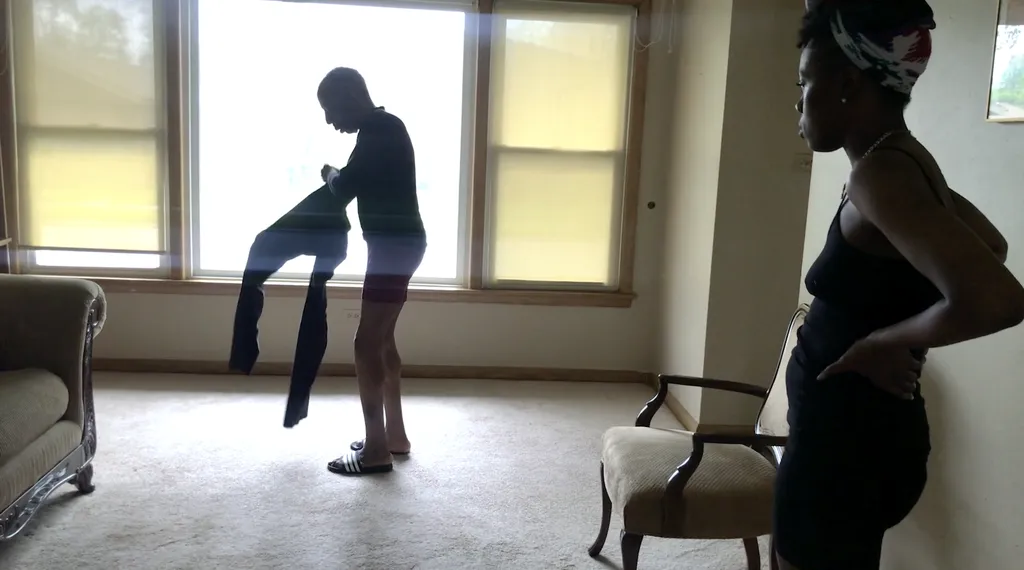
When watching the film, something predictable happens. People start measuring themselves against what they’re watching.
- I can’t do what she’s doing.
- I don’t have that kind of time.
- I live three states away.
- I visit on weekends when I can.
- Is that enough?
We want to say this clearly: yes. It is enough.
Caregiving doesn’t have a single shape. It looks like:
- A daughter who calls every morning
- A son who handles the finances from across the country
- A neighbor who drives to doctor’s appointments
- A grandchild who sits and watches old movies with someone they love
- A friend who simply shows up
- A caregiver who shows up exhausted — and shows up anyway
The Family Caregiver Alliance identifies guilt as one of the most common emotions caregivers carry. Guilt over not doing enough. Not being present enough. Not being the caregiver they imagined they’d be.
The bar caregivers set for themselves is almost always impossibly high.
But research also tells us this: what protects caregivers and sustains the people they care for is not the amount of care given. It is:
- The quality of presence
- The intention behind it
- The love in it
Arlieta’s use of improv isn’t just a caregiving technique. It’s a philosophy:
- Meet people where they are
- Say yes to what’s in front of you
- Build on what you have, not what you’ve lost
That principle applies to every caregiver. In every circumstance. At every level of capacity.
Whatever caregiving looks like in your life — it counts. You count.